Blog/News

A conversation with Leah Roseman

Classical music podcaster Leah Roseman and I had a long conversation sometime in September, which is now out on her podcast channel and on YouTube. For any interested in me going on and on about my favorite subject – music – sharing a link. We talk about a range of subjects – composing, music theory, my bifurcated life both inside and outside of the music world, and other sundry topics.

https://www.leahroseman.com/episodes/stanley-grill


A response to someone who argued that all music is political

I have given this subject a great deal of thought – but recognize the disparity between what I do and what I really believe. The motto I have on my music website and business cards is “Music can change the world | beauty, harmony, peace.” And I often find myself repeating Lenny Bernstein’s famous quote “This will be our reply to violence: to make music more intensely, more beautifully, more devotedly than ever before.”

The events in the world around me have frequently provoked me to write music in response. I have a Music for Peace series, a Music for the Earth series, Music for Ukraine, Music for Israel. They are my personal, musical response to societal ills that gnaw at me – but do they actually achieve anything? Can the music change the minds and hearts of those who hear it with regard to such issues?

I like to pretend that it does. I harbor thoughts such as Plato did, that music can alter minds. But I don’t really believe it does. Music can alter moods – it certainly alters mine! But can it be political in the sense that it alters anyone’s political viewpoints? I think the answer is a definite no. After all, Nazis loved their Beethoven and it didn’t keep them from committing horrors – and Beethoven, who also wrote music with political intentions, was the furthest person from a Nazi mindset one can imagine. Ditto for the Japanese warriors who, after a day of lopping off heads, wrote haiku and practiced their calligraphy.

On Substack especially, I see people writing, writing, writing – endless words aimed at altering people’s political opinions. Does any of it change a single mind? My guess is that it does not. I learned long ago that no matter the logic, no matter the facts at hand, one can’t change the political opinions of even your closest family and friends, let alone that of total strangers on the internet.

Will I continue to write music as if it can accomplish more? Yes. But that is more to satisfy myself than with wishful thinking that it will really have a salutary impact on the world writ large. So enjoy the music one hears. Let it fill you with emotion. But it is not political – even if written with the most political of intentions. It is just notes becoming passing, momentary waves of sound that pluck upon your psyche, more powerfully in some than in others.

Grammy voting

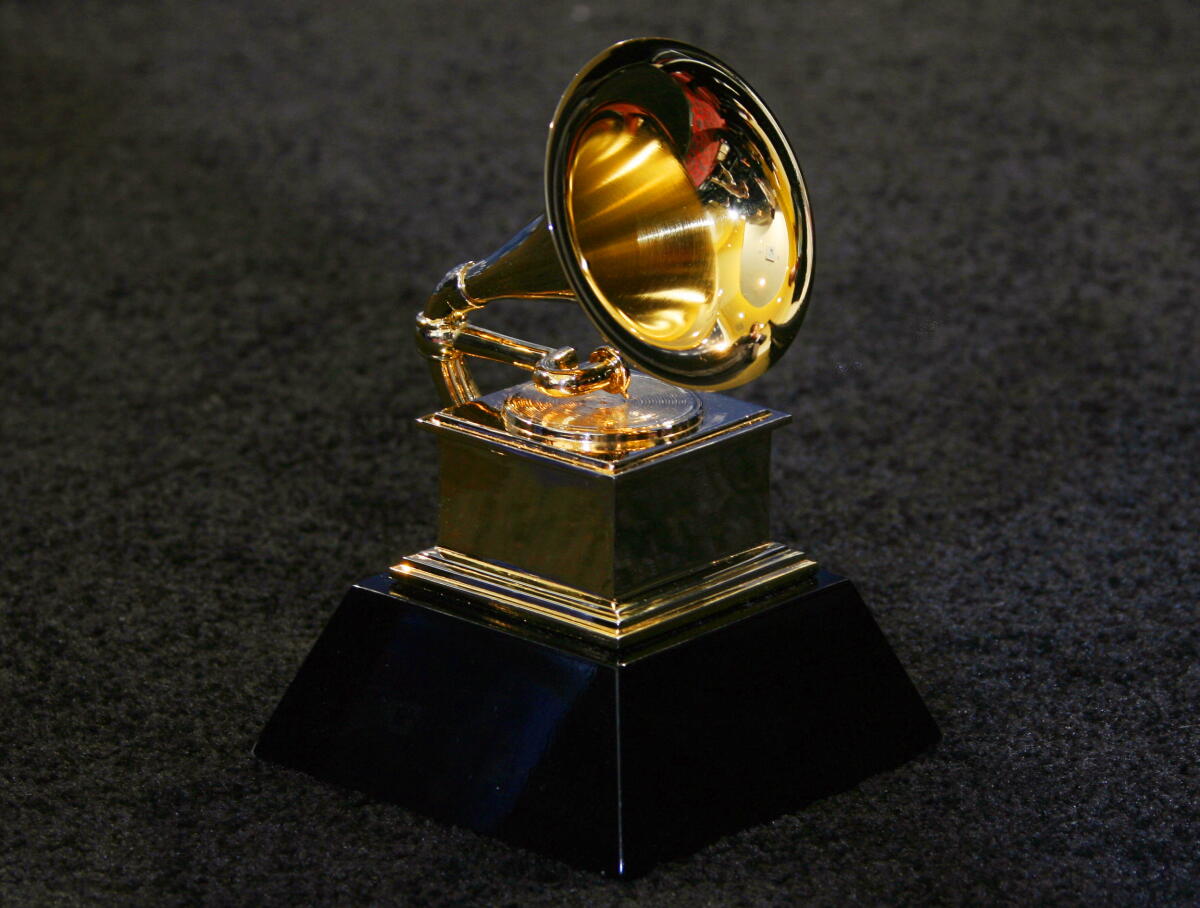
Another Grammy voting season is here. As usual, from every direction, email and social media, I am inundated by a tsunami of notices from musicians bringing their submissions to my attention.

I’ve come to the conclusion that I don’t vote the same way as others do. It seems most do their listening before voting actually begins and then vote for whoever they’ve decided to support beforehand. I don’t do that. I don’t do any listening before voting starts. During the voting period, I go diligently through my 10 selected categories, giving a listen to most entries, on the hunt for any music that pops out to my ear as something different, where the music isn’t the “same old, same old.”

While there may be hundreds of entries in each category, one way I get through it is by skipping any new recordings of classical “warhorses” that have been recorded hundreds of times by others. If someone has decided to submit yet another recording of, let’s say, a Beethoven sonata, I just skip it. With the vast quantity of worthy music out there that is hardly known by the general listening public, why, oh why, do that? What are the chances that the artist, no matter how good they are, bring something new to that recording?

I yearn for music that stands out from the crowd and brings a very personal voice to the recording. Or that brings sounds from the past to the world that are deserving of a fresh look because, for whatever reasons, a composer has faded into undeserved obscurity.

Every year, and I suspect this year will not be any different, the pickings are slim. Most entries strike me as “same old, same old”. Yet the great pleasure of this exercise for me is that every year I find gems – composers or performers whose work I never heard before that is wonderful – and most deserving of recognition.

Thoughts on reading Stravinsky’s Harvard lectures

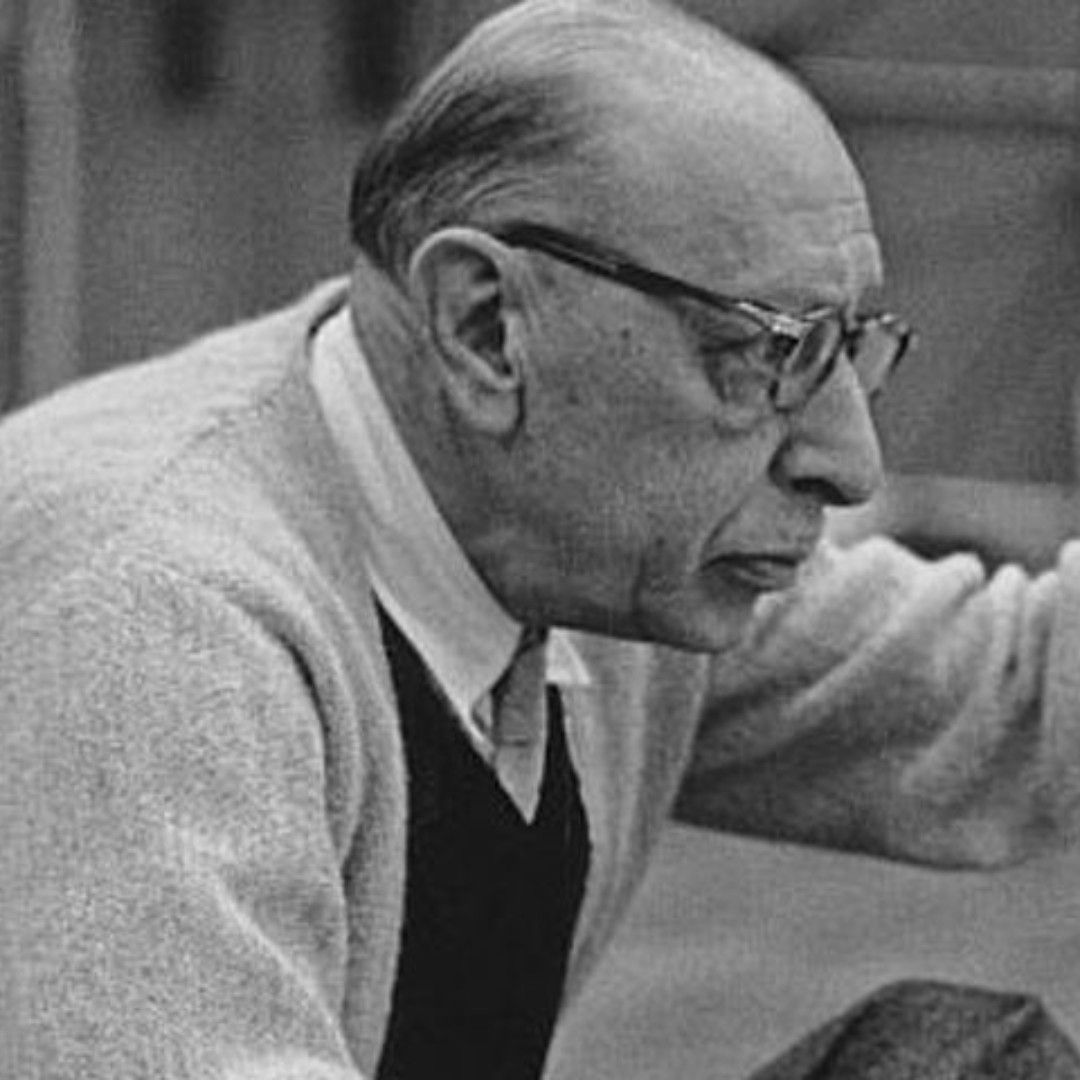
Seeing a mention on someone’s Substack post (I don’t now remember whose) of Stravinsky’s Harvard lectures, not having previously read them, I ordered a copy. The overall gist of the lecture series is that composing is the hard work of discovery within the boundaries of order, creating something sensible out of the endless possibilities of chaos, your tools being the basic elements of music.

He takes the elements of music and discusses them in turn. One quote which resonated with me was in his discussion about melody.

“The capacity for melody is a gift. This means that it is not within our power to develop it by study. But at least we can regulate its evolution by perspicacious self-criticism. The example of Beethoven would suffice to convince us that, of all the elements of music, melody is the most accessible to the ear and the least capable of acquisition. Here we have one of the greatest creators of music who spent his whole life imploring the aid of this gift which he lacked. So that this admiral deaf man developed his extraordinary faculties in direct proportion to the resistance offered him by the one he lacked, just the way a blind man in his eternal night develops the sharpness of his auditive sense.”

Just my opinion but I think he hit the nail on the head here. Beethoven’s music always struck me as a titanic struggle with the tools that he never quite mastered – melody and counterpoint. The results were extraordinary – but are rarely delivered with the ease, perfection and eloquence of those who naturally possessed those innate talents. Bach for one. The example Stravinsky gives as an opposite to Beethoven is Bellini, a man from whom melodies just poured out seemingly without effort. That’s not an example I would have chosen myself. After reading the paragraph I spend several hours listening to Schubert songs. Now there was a talent for melody.

Notwithstanding the above, while Beethoven is far from one of my personal favorites, his imagination was beyond compare and music (again just my opinion) such as the late string quartets, late piano sonatas, put him on the mountain top. But I always found much of his other music over reliant on scales, arpeggios and chords – without a gorgeous, heartbreaking melody to be found. In short, a great but uneven composer.

Off on a tangent, I was recently listening to the symphonies of Brahms and Gernsheim. The latter also wrote four symphonies, each one prior to Brahms writing his. If you were listening to one without knowing whose work it was, you might wonder to yourself “did Brahms write more than the four symphonies I know?” The sound fabric is so similar. Given that Gernsheim wrote each of his four symphonies first, perhaps calling his music Brahmsian is wrong. Rather, the reverse, Brahms’ symphonies are Gernsheimian!

It seems to me that of the two, Gernsheim was the better orchestrator and had a real mastery and control over form. But returning to the theme with which I started, Brahms had a greater natural gift of melody – and it is that which makes him the greater composer. His symphonies sing gloriously with unforgettable incomparable melodies.

Listening to the symphonies of Nikolai Myaskovsky

I spend a great deal of time exploring classical music by forgotten composers, finding myself more intrigued when listening to music that is entirely new to me than hearing the “warhorses” for the hundredth time. Frequently, I find myself wondering what happened that a composer, renowned in their day, fell into obscurity. Sometimes the explanation seems to be simple. The composer was good – but not great. But even great composers can disappear. After all, it happened to Bach! Today, who doesn’t know and admire his music? Yet, while his music continued to be known and studied by composers after his death, if were not for the efforts of Mendelssohn and his 1829 performance of the St. Matthew Passion, things might have continued that way. Composers need, especially after their deaths, a champion, or face oblivion.

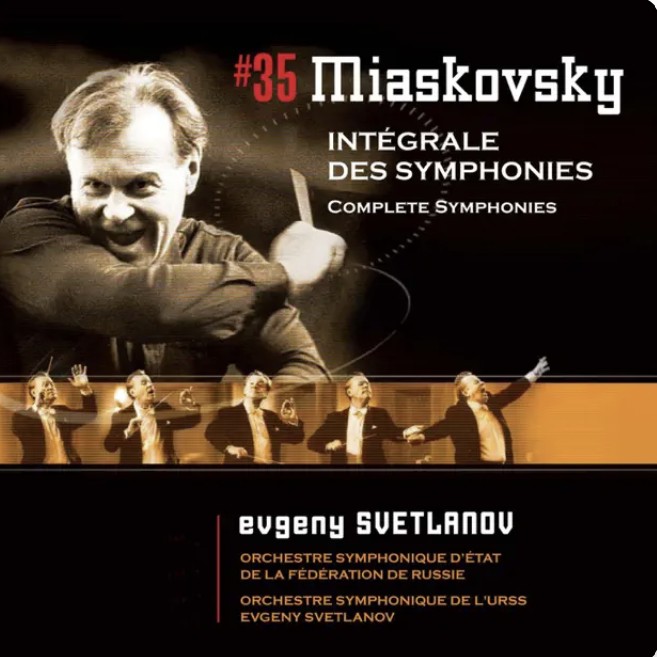
Over the past several days, I’ve been immersed in the complete symphonies of Myaskovsky, on a compilation album on Apple Classical Music conducted by Evgeny Svetlanov. Who plays them today? Not anyone I can think of, but he was known, with good reason, as the father of the Russian symphony. The album includes all 27 symphonies. Now that these have whetted my appetite, next up will be a compilation album of his 13 string quartets.

While today, Mahler and Bruckner have their detractors, their symphonies are well known and frequently performed and recorded. That was not always the case. Perhaps not as long as the time between Bach’s death and his later revival, yet decades went by without Mahler and Bruckner garnering the same attention they do today. I wonder whether, at some point in the future, some renowned conductor will revive Myaskovsky’s symphonies and his work regain the general interest they once did.

I read somewhere that Myaskovsky and Prokofiev, despite their age difference, attended conservatory together, and were close. Prokofiev, however, wasn’t much of a fan. He recognized Myaskovsky’s skill and the beauty of his writing but thought he lacked the spark to loft his music into the first rank. Personally, after listening to most, if not yet all, of the 27, I find them to be quite moving. That spark is there. Each to their own but with the exception of some notable works, it is Prokofiev’s music that I find doesn’t stand the test of time.

Perhaps this brief note will intrigue whoever stumbles across it enough to listen – and hopefully, they’ll enjoy listening their way through this wonderful album as much as I did.

Nicolai Myaskovsky: Symphonies 1 – 27

The Mystic Trumpeter

Among the approximately 70 or so compositions I wrote during the years of COVID shutdown was my musical response to Whitman’s poem THE MYSTIC TRUMPETER. At the time, I was leafing (pun intended) through Leaves of Grass looking for poems that would be relevant to today’s rather beleaguered American democracy, thinking that a look back to Whitman writing during the Civil War would yield fruit. Off track, I came across THE MYSTIC TRUMPETER, and musical ideas filled my mind while reading it, so off I went writing them down and finished a work for trumpet and string orchestra within a week. At the time, I just wrote – without bothering to explore whether or not anyone else had been inspired by the same poem. It was only relatively recently that I found, unsurprisingly, that I was far from the only composer so inspired.

In eight parts, the poem struck me particularly in that Whitman looked to music, in this case the sounds of a wild trumpeter, to refresh his tired soul. And, after all, that is what every lover of music feels! We turn to music when we are most troubled by whatever travails we face and it gives us hope and courage to go on.

A link to the poem from the Whitman Archives

Gustav Holst: THE MYSTIC TRUMPETER for soprano and orchestra

F.S. Converse: THE MYSTIC TRUMPETER for orchestra.

Claude Baker: THE MYSTIC TRUMPETER for orchestra

Stanley Grill: THE MYSTIC TRUMPETER for trumpet and string orchestra

Recent Posts

Subscribe via Email

Enter your email address to subscribe to this blog and receive notifications of new posts by email.

Posts Archive